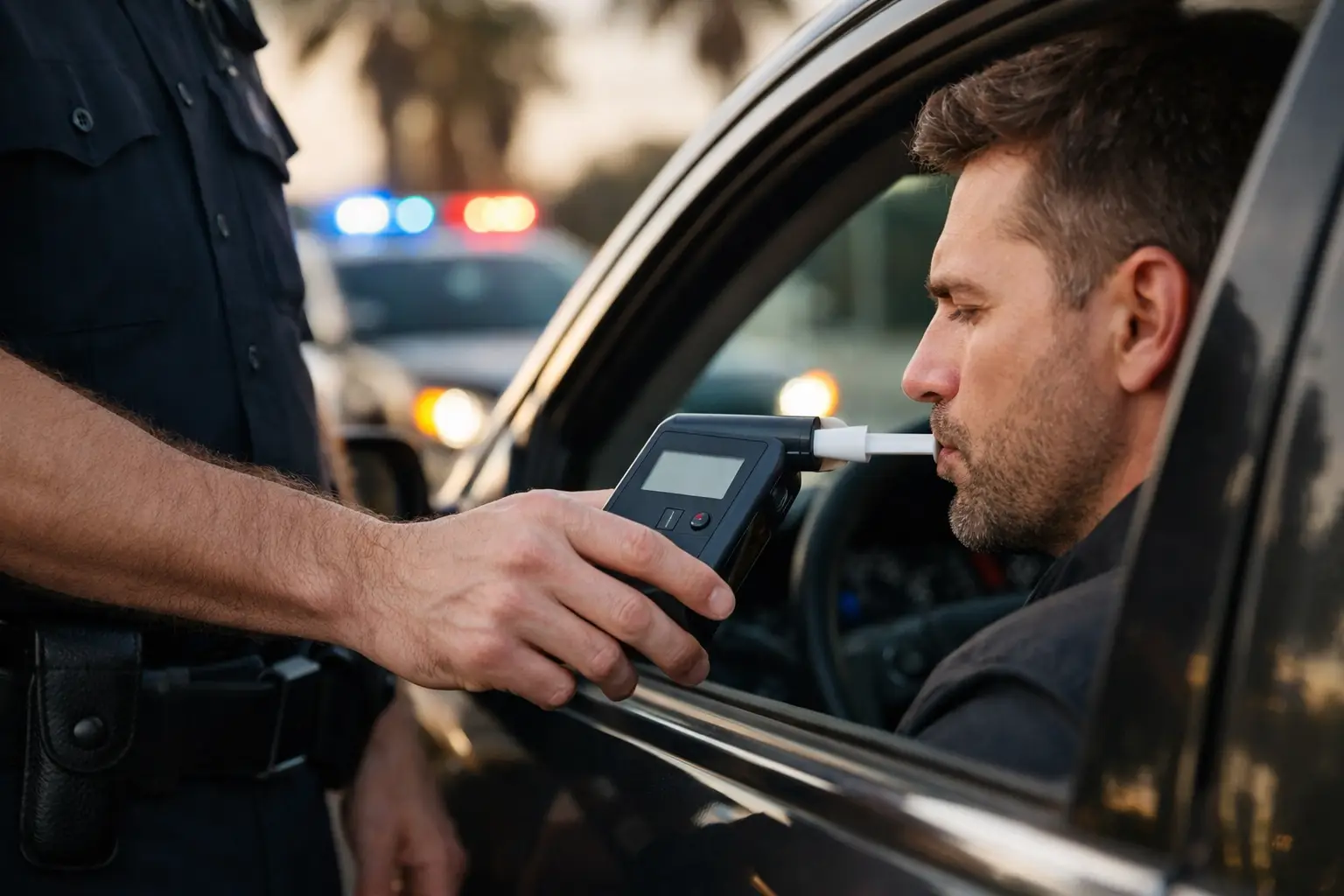
A flashing patrol car in your rearview mirror is stressful. Being asked to blow into a machine on the side of the road is worse. If you are asking, can you refuse a breath test in Florida, the short answer is yes – but that decision can trigger immediate consequences that may hit your license, your record, and your DUI case fast.
That is where people get trapped. They hear they have a “right to refuse,” assume refusal protects them, and only later learn Florida’s implied consent law changes the picture. Refusing is not the same thing as walking away clean. In many cases, it creates a different set of problems that need a fast, aggressive defense.
Can you refuse a breath test in Florida under the law?
Yes. In Florida, you can physically refuse to take a lawful breath test after a DUI arrest. Police cannot usually force you to blow into the breath machine just because they asked. But Florida treats driving as a privilege, not an unconditional right. By driving on Florida roads, you are considered to have given implied consent to submit to a lawful breath, blood, or urine test when an officer has probable cause and makes a proper DUI arrest.
That means refusal carries penalties separate from whether the DUI charge itself is ultimately proven. The state may suspend your driver’s license even if you never blow over the legal limit. If this was not your first refusal, the stakes get much higher because a second or subsequent refusal can be charged as a separate criminal offense.
This is the part many drivers do not understand in the moment. Refusal is legally possible, but it is not consequence-free.
The difference between roadside tests and a breath test after arrest
Not every test request is the same, and that distinction matters.
Field sobriety exercises on the roadside are different from an evidentiary breath test. The walk-and-turn, one-leg stand, and eye tests are generally not the same as a formal post-arrest breath test at the station. Portable roadside breath devices may also be treated differently from the approved evidentiary machine used after arrest.
In many DUI stops, the key implied consent warning comes after arrest, when the officer requests a breath test using an approved instrument. Refusing that test can trigger the administrative and criminal consequences people fear most. Whether the officer had legal grounds for the stop, whether the arrest was valid, and whether implied consent warnings were properly given can all become critical defense issues.
That is why the facts matter more than the myths. A refusal case is never just about whether you said yes or no. It is about what the officer did before that moment and how the refusal was documented.
What happens if you refuse a breath test in Florida?
If you refuse a lawful breath test for the first time, your driver’s license can be suspended for one year. If it is a second or later refusal, the license suspension can jump to 18 months, and the refusal may be charged as a first-degree misdemeanor.
That criminal charge for a repeat refusal is a serious threat by itself. It can expose you to added penalties beyond the DUI case. For professionals, parents, and anyone who depends on a clean record or steady transportation, that fallout can reach far beyond court.
Refusal can also be used against you by the prosecution. A prosecutor may argue that you refused because you knew you were impaired. That does not automatically win the state’s case, but it can become part of the narrative they try to build.
At the same time, refusal may deprive the state of a breath number. That can matter. Without a measured alcohol result, the prosecution may have to rely more heavily on officer observations, driving pattern allegations, body camera footage, witness statements, and field sobriety performance. Sometimes that weakens the case. Sometimes it does not. It depends on the evidence.
Can refusing help your DUI case?
Sometimes people want a simple rule: always refuse or never refuse. Real DUI defense does not work that way.
Refusing may remove one powerful piece of evidence – a reported breath-alcohol reading. If the state does not have a number, it loses one direct way to claim impairment or unlawful alcohol level. In some cases, that opens the door to stronger evidentiary attacks, especially when the driving pattern was minor, the stop was questionable, or the officer’s observations are inconsistent with the video.
But refusal can also create damage. The license suspension is real. A repeat refusal can become a crime. And prosecutors often try to turn refusal into a consciousness-of-guilt argument.
So can refusing help your DUI case in Florida? Sometimes. Can it make things worse? Absolutely. The answer depends on your arrest history, the officer’s procedures, what evidence exists apart from the breath test, and whether your lawyer can challenge the stop, arrest, warning, or suspension process.
The hidden issue: your deadline to fight the suspension
After a DUI arrest involving a refusal, many people focus only on the criminal court date. That is a mistake.
Your driver’s license issue moves on a separate, fast track. There is only a short window to challenge the administrative suspension. If you wait, you can lose valuable rights and options before your defense strategy is even fully built.
For someone in Miami-Dade County, that can mean missed work, transportation problems, higher financial pressure, and a weaker overall position from the start. This is why fast action matters. The first days after arrest are not dead time. They are often the most important part of the case.
How a lawyer attacks a Florida refusal case
A strong DUI defense does not accept the refusal at face value. It tests every step the officer took.
The first issue is the stop. If the traffic stop was illegal, the evidence that followed may be challenged. The next issue is probable cause for arrest. Officers must have lawful grounds to arrest you for DUI before implied consent penalties can properly attach.
Then there is the warning itself. Did the officer properly advise you of the refusal consequences? Was the request clear? Were language barriers, confusion, medical issues, or hearing issues involved? Did the officer mark a refusal when the situation was actually ambiguous? Those details matter.
An experienced lawyer also looks at video, dispatch timing, breath room procedures, witness statements, and paperwork consistency. In some cases, the defense may challenge whether there was a true refusal at all. In others, the attack focuses on suppressing evidence, invalidating the suspension, or undermining the prosecution’s theory of impairment.
At George Law, these are the kinds of pressure points that can change the direction of a DUI case quickly when they are identified early.
When refusal cases become more dangerous
Some refusal cases carry more exposure than others. Repeat DUI allegations are one obvious example. If you have prior DUI history, the court and the prosecution may treat the new arrest more aggressively from day one.
Refusal cases also become more serious when there is a crash, an injury allegation, a child passenger, property damage, or statements that the prosecution claims show impairment. Professional license holders may face additional employment or disciplinary fallout even before the case is resolved.
And if this was your second refusal, the separate criminal refusal charge needs immediate attention. That is not a paperwork issue. That is a prosecutable offense with real consequences.
What you should do right after a refusal arrest
Do not try to fix this by talking your way out of it after the fact. Do not call the officer. Do not explain yourself on social media. Do not assume a first court date is the first deadline that matters.
Instead, write down everything you remember while it is fresh. Where you were stopped, what the officer said, whether you were read warnings, whether you asked questions, whether there was confusion, and whether there is video or a witness who saw the stop. Those small details can become major defense tools later.
Then get legal help immediately. A DUI refusal case moves fast, and the best defenses often come from procedural flaws that need to be preserved early. Delay helps the state. Speed helps the defense.
The real answer to can you refuse a breath test in Florida
Yes, you can refuse a breath test in Florida. But refusal is not a safe button and it is not a free pass. It can protect you from giving the state a breath number while also exposing you to license suspension, stronger prosecution arguments, and in repeat cases, an additional criminal charge.
If you were arrested in Miami or anywhere in Miami-Dade County, the most important question is no longer what you should have done at the roadside. It is what you do next. Your future is still in play, and the right defense strategy can start pushing back now.