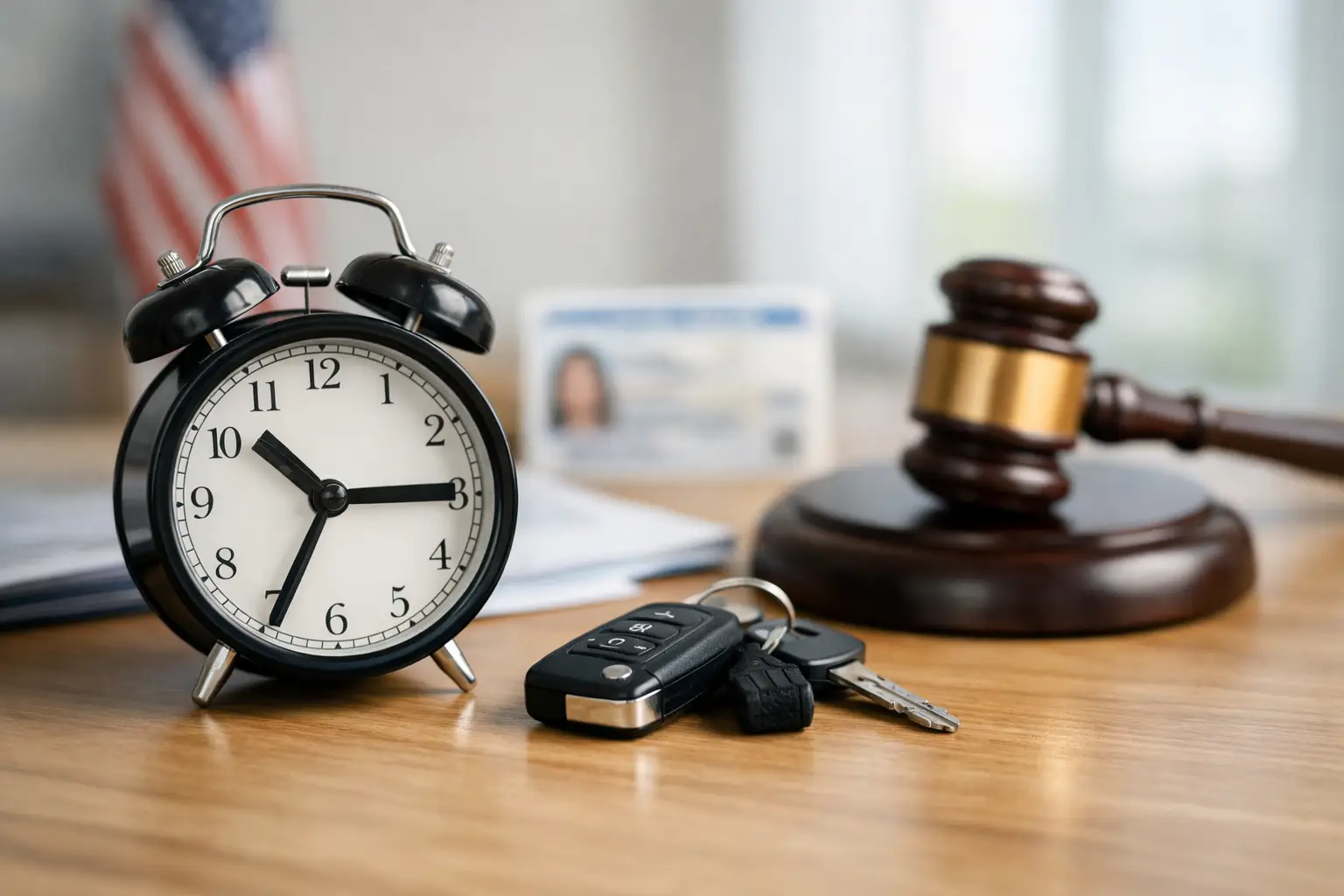
The clock starts fast after a DUI arrest. If you are asking how long do you have to request a DMV hearing after DUI, the answer in Florida is usually 10 days from the date of arrest. Miss that window, and you can lose the chance to challenge the administrative suspension of your driver’s license before it takes effect.
That deadline matters because the DMV side of a DUI case is separate from the criminal case. A lot of people do not realize that. They focus on court, bond, and what happens next with the charge itself, while the license issue is already moving. By the time they try to deal with it, the deadline may be gone.
How long do you have to request a DMV hearing after DUI in Florida?
In most Florida DUI cases, you have 10 days to request a formal review hearing with the Florida Department of Highway Safety and Motor Vehicles after the arrest. This is the hearing that gives you a shot at fighting the administrative suspension.
For many drivers, the officer takes the physical license at the time of arrest and issues a temporary permit. That permit is not open-ended. It is part of the short post-arrest window, which is exactly why fast action matters.
If you refused a breath, blood, or urine test, or if you blew over the legal limit, the DMV can move to suspend your license administratively. That happens apart from whatever the criminal court does. You could still be fighting the DUI charge months later while your license is already suspended because no hearing request was filed in time.
Why the 10-day deadline is so serious
This is not a technical detail. It can affect your job, your family responsibilities, and your leverage in the overall DUI defense.
A DMV hearing can give your attorney an early chance to examine the officer’s basis for the stop, the arrest, the alleged refusal, or the breath test procedure. That matters beyond driving privileges. In some cases, it can reveal weaknesses that help the criminal defense too.
There is also a practical problem. If your license is suspended and you are left scrambling for transportation in Miami-Dade, your life gets harder immediately. Missing work, relying on rides, and dealing with insurance fallout can create pressure that follows you long before your court date.
What happens if you do not request the hearing?
If you do not request the DMV hearing within the deadline, the administrative suspension usually goes into effect. At that point, your options narrow.
That does not mean your DUI case is over. It does mean you may lose the opportunity to challenge the suspension through that hearing process. Depending on the facts, you may still be able to pursue hardship reinstatement or other limited relief later, but that is not the same as preserving your full right to fight the suspension from the start.
This is where people get trapped by bad assumptions. They think, “I hired a lawyer for court, so the license part must be handled too.” Sometimes it is. Sometimes it is not. You need to make sure someone is actually addressing the DMV deadline immediately.
What the DMV hearing is really about
A formal review hearing is not a full criminal trial. It is a limited administrative proceeding focused on whether the state had a lawful basis to suspend your license.
The issues often include whether the officer had probable cause to believe you were driving or in actual physical control of a vehicle while impaired, whether you were lawfully arrested, whether you were properly warned about refusal consequences, and whether any breath or alcohol test results were legally obtained.
That may sound narrow, but it can still be powerful. A good DUI defense lawyer uses this stage strategically. Officers can be questioned. Documents can be examined. Timelines and procedures can be challenged. In the right case, what happens at the DMV level can help shape the defense going forward.
Refusal cases and over-.08 cases are different
Not every suspension is based on the same allegation. In Florida, one common path is an unlawful breath or chemical test refusal. Another is a breath-alcohol level of .08 or higher.
The consequences can vary depending on whether this is a first DUI arrest or whether there is a prior history. For example, a refusal allegation can create different suspension periods than a failed test. Repeat issues can make the stakes even higher.
That is why the answer to how long do you have to request a DMV hearing after DUI is only the starting point. The real question is what kind of suspension you are facing and what strategy gives you the best chance to protect your license and your record.
What to do in the first 10 days
The most important step is simple: do not wait.
As soon as possible after the arrest, get your paperwork together. That usually includes the DUI citation, any notice of suspension, your temporary permit, bond paperwork, and anything else given to you by law enforcement or the jail. Those documents can help identify the exact basis for the suspension and confirm the timeline.
Then have a DUI defense attorney review the case immediately. In a time-sensitive situation like this, speed is not about panic. It is about preserving options. When a lawyer steps in early, they can determine whether to request the formal review hearing, seek a waiver review in some situations, evaluate hardship eligibility, and start building the defense before key opportunities disappear.
Can you still drive after a DUI arrest?
Sometimes, but only for a short period and only under certain conditions.
In many Florida DUI cases, the temporary permit allows limited driving for 10 days after the arrest. After that, whether you can continue driving depends on what was filed and what relief is available. If no hearing was requested in time, you may be facing a suspension without the same immediate procedural protection.
This is one of the biggest reasons people feel blindsided. They think they have more time because they still have a piece of paper that looks like driving authority. But that temporary window closes quickly.
Why local DUI defense matters in Miami-Dade
DUI cases are urgent everywhere, but local experience matters when your arrest happened in Miami, Miami Beach, Coral Gables, or elsewhere in Miami-Dade County. The officers, agencies, hearing procedures, and local court dynamics are not abstract issues. They affect how a defense is built.
A lawyer who regularly handles DUI cases in this area can move faster, spot procedural mistakes earlier, and connect the DMV fight with the criminal defense from day one. That is especially important if your livelihood depends on driving, you hold a professional license, or you are dealing with a repeat allegation where the consequences climb fast.
George Law handles these cases with the urgency they demand, because the first days after a DUI arrest are often the most important.
Common mistakes after a DUI arrest
The first mistake is waiting for the court date before taking action. The second is assuming the DMV issue will sort itself out. The third is talking yourself into the idea that this was “just a first offense” so the license consequences will be minor.
Florida does not treat DUI as minor, and the administrative process does not pause while you try to get your bearings. Even first-time arrests can trigger serious disruption. For repeat arrests, CDL holders, and drivers with prior alcohol-related history, the damage can spread even faster.
There is also a trade-off to consider. Some drivers focus only on getting a hardship license as quickly as possible, while others want to contest the suspension through a hearing. The right move depends on the facts, your record, and your larger defense goals. A rushed decision without legal guidance can cost you leverage later.
The right question is not just how long
Yes, the usual answer to how long do you have to request a DMV hearing after DUI in Florida is 10 days. But if you stop there, you are missing the bigger issue.
The real issue is that those 10 days may be your first chance to protect your license, test the state’s evidence, and put a serious defense in motion. Once that window closes, you do not get the same position back.
If you have been arrested for DUI, treat the deadline like the emergency it is. Quick action now can protect far more than your ability to drive. It can protect your job, your reputation, and the room you need to fight back effectively.