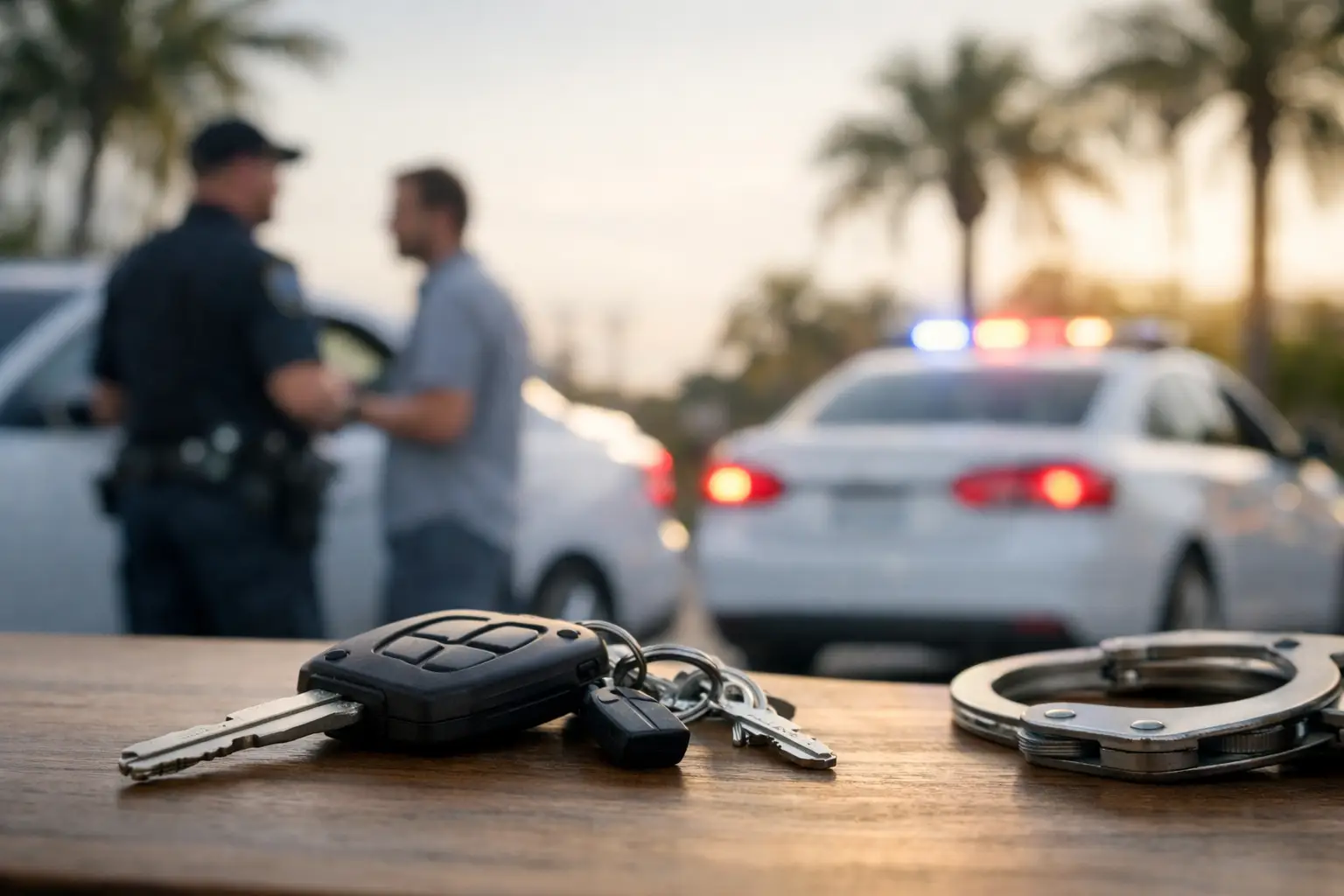
The question hits hard the moment you get out of jail: can you drive after DUI arrest? In Florida, the answer is sometimes yes, sometimes no, and the difference can affect your job, your family, and your defense. What happens next depends on what the officer took, what paperwork you received, whether you refused testing, and how fast you act.
This is not the moment to guess. A wrong move can turn a DUI arrest into a license crisis that gets worse by the day.
Can You Drive After DUI Arrest in Florida?
In many Florida DUI cases, you may be able to drive for a short period immediately after arrest, but only under specific conditions. If law enforcement seized your physical license and gave you a DUI citation or temporary driving permit, that paperwork may allow limited driving for 10 days from the date of arrest. For many first-time drivers who provided a breath, blood, or urine sample over the legal limit, that 10-day permit is the critical window.
But not every driver gets that same break. If you refused a lawful breath, blood, or urine test, the rules are tougher. If your license was already suspended, if you hold a commercial driver license, or if there are aggravating facts in the case, your driving status may be much more restricted. Some people leave the arrest thinking they are covered, only to learn later they were not legally allowed to drive at all.
That is why the paperwork matters. The officer’s notice of suspension, the citation, and the permit language control what happens right away – not what a friend says happened in their case.
The 10-Day Deadline Can Change Everything
After a Miami-Dade DUI arrest, one deadline matters immediately: 10 days. During that period, you may have the right to challenge the administrative suspension of your license through the Florida Department of Highway Safety and Motor Vehicles. If you do nothing, the suspension usually takes effect automatically after the 10-day permit expires.
That hearing is not just about asking for mercy. It can be a strategic opportunity. Your attorney can examine whether the stop was legal, whether the arrest was supported by probable cause, whether the officer followed proper procedure, and whether the alleged refusal or breath result is vulnerable to attack. In the right case, early action can protect your driving privilege and expose weaknesses that matter later in court.
If you miss the deadline, your options shrink fast. You may still be able to pursue a hardship license, but you lose leverage and time. When your ability to get to work, pick up your kids, or keep a professional license is on the line, delay is dangerous.
What If You Blew Over the Legal Limit?
If you took a breath test and the result was 0.08 or higher, Florida can impose an administrative suspension even before your criminal case is resolved. For a first DUI, that suspension is typically six months. If this is not your first qualifying event, it can be longer.
That does not always mean you are completely barred from driving for the full suspension period. Many drivers may qualify for a hardship license that allows business-purpose driving, such as commuting to work, school, medical appointments, or necessary household errands. But eligibility depends on the facts, your driving history, and whether you act within the proper timeline.
A lot of people make the mistake of thinking the criminal case and the license case are the same. They are not. You can still be fighting the DUI charge in court while your administrative license issue is moving on a separate track.
What If You Refused the Breath Test?
Refusal cases are more serious from a license standpoint. Under Florida’s implied consent law, refusing a lawful test can trigger an administrative suspension even if the criminal DUI charge is later reduced or dismissed. For a first refusal, the suspension is usually one year. For a second or subsequent refusal, the suspension can be much harsher and may also create additional criminal exposure.
Refusal also affects hardship eligibility. In many first-refusal cases, you may have to serve a hard suspension period before becoming eligible for hardship reinstatement. That means no lawful driving at all during that time. If you are a nurse, teacher, contractor, salesperson, or anyone who depends on driving to stay employed, that kind of interruption can hit fast and hard.
This is where early legal intervention matters most. Refusal cases often turn on whether the officer properly warned you, whether the request was lawful, and whether the process was handled correctly. Those details are not technicalities. They can decide whether your license stays suspended.
Can You Drive to Work After a DUI Arrest?
Maybe, but do not assume it. Some people can lawfully drive for 10 days on the temporary permit. Others must stop driving immediately. After that initial period, business-purpose driving may be possible through a hardship license, but only if you qualify and complete the required steps.
Business-purpose driving is limited. It is not a return to full freedom. It generally covers essential travel like work, school, religious services, medical care, and errands necessary to maintain your household. It does not mean you can drive anywhere, anytime, for any reason.
If you drive outside the terms of your privilege, you risk a new criminal charge. That can damage your DUI defense, increase penalties, and make the original arrest much harder to contain.
Why Miami DUI Cases Need Fast, Local Action
A DUI arrest in Miami-Dade County moves on two fronts at once: the criminal case in court and the administrative battle over your license. Each has deadlines, each has consequences, and each can affect the other. Waiting to see what happens is one of the most expensive mistakes people make.
Strong DUI defense starts with immediate damage control. That means reviewing the stop, body cam footage, breath testing records, field sobriety issues, implied consent warnings, and officer reports before the case hardens against you. It also means protecting your ability to drive while the case is still fresh.
For many people, the license issue is the first emergency. You can deal with a pending court date for a few weeks. You cannot always deal with missing work, losing income, or getting arrested for driving on a suspended license because you misunderstood your paperwork.
What You Should Do Right After a DUI Arrest
Start by reading every document you were given. Check whether your license was physically taken, whether you received a temporary permit, and exactly how long that permit lasts. Do not rely on memory. Do not rely on what the arresting officer supposedly said in the moment.
Next, stop making assumptions about what you are allowed to do. If there is any doubt, treat it seriously. Driving without legal authority can create a second problem before your first one is even under control.
Then get legal help immediately. A DUI lawyer can determine whether you can still drive, whether you should request a formal review hearing, whether you may qualify for a hardship license, and how the facts of the arrest affect both your license and the criminal charge. In a time-sensitive case like this, speed is not just helpful – it is protective.
George Law handles DUI defense with the urgency these cases demand, including license suspension issues, DMV hearing strategy, and aggressive challenges to the evidence behind the arrest.
The Real Answer to “Can You Drive After DUI Arrest” Depends on the Details
There is no one-size-fits-all answer because DUI arrests do not all trigger the same license consequences. A first-time DUI with a breath result over 0.08 is different from a refusal case. A standard driver’s license is different from a commercial license. A clean record is different from a prior suspension history. And what you do in the first 10 days can change the outcome.
What matters now is getting the right answer for your case, not a generic answer from the internet. If you were arrested for DUI in Miami, protect your future by finding out exactly where you stand before you get behind the wheel again. One fast, informed decision now can prevent a much bigger problem later.