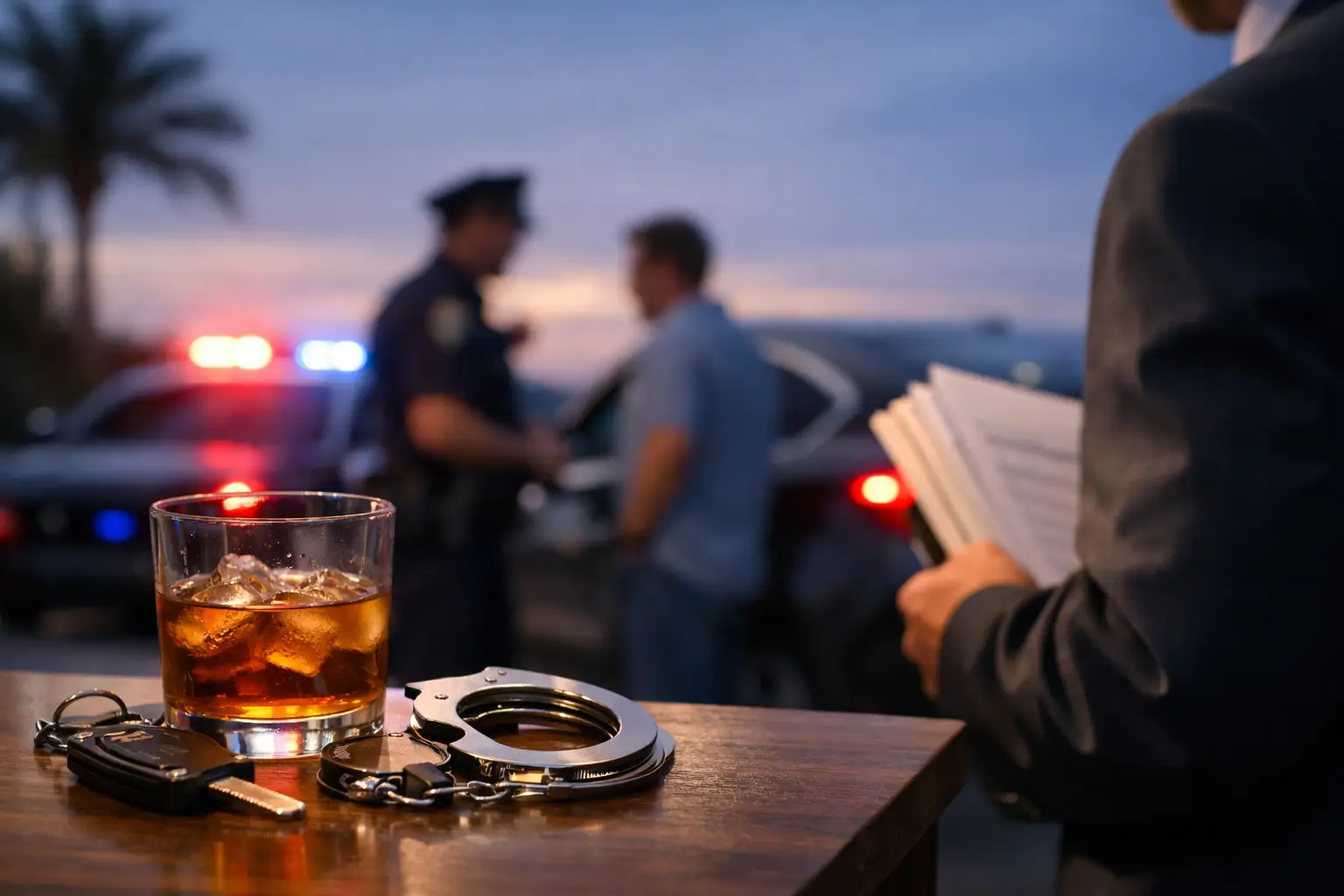
A DUI arrest in Miami can feel like the ground just shifted under your feet. One night, one traffic stop, one set of allegations – and suddenly your license, job, reputation, and freedom all feel exposed. If you are asking, can DUI charges be dropped, the short answer is yes. But it does not happen automatically, and it rarely happens because someone simply asks for leniency.
DUI charges get dropped when the State’s case has real weaknesses. That usually means a legal problem with the stop, the arrest, the testing, the officer’s procedures, or the evidence itself. The strongest defense starts early, before deadlines pass and before bad assumptions turn into lasting damage.
Can DUI Charges Be Dropped After an Arrest?
Yes, DUI charges can be dropped after an arrest, but the reason matters. Prosecutors do not dismiss cases because a person is scared, employed, or facing serious consequences. They dismiss cases when the evidence is too weak to prove guilt beyond a reasonable doubt or when police violated the driver’s rights.
That distinction is critical. A DUI arrest is not a conviction. In Florida, the prosecution still has to prove impairment or unlawful breath or blood alcohol levels. If the evidence does not hold up, the case can fall apart.
This is why the first days after an arrest matter so much. The window to protect your driving privileges is short, and the opportunity to preserve evidence can disappear fast. Surveillance footage gets erased. Witness memories fade. Paperwork errors go unchallenged unless someone knows where to look.
The Most Common Reasons DUI Charges Get Dropped
Every DUI case turns on its own facts, but dismissals often come from a handful of recurring failures in the State’s case.
The traffic stop was illegal
Police must have a lawful reason to pull you over. If the officer stopped you without reasonable suspicion of a traffic violation or criminal activity, the defense can challenge everything that followed. If the stop was unlawful, key evidence may be suppressed. That can gut the prosecution’s case.
A hunch is not enough. Neither is a vague claim that you looked suspicious. The officer needs articulable facts, and those facts must stand up in court.
The officer lacked probable cause to arrest
Even if the initial stop was legal, the arrest itself can still be attacked. Officers often rely on alleged signs of impairment such as bloodshot eyes, odor of alcohol, slurred speech, or poor balance. Those observations can be exaggerated, misunderstood, or unrelated to intoxication.
Fatigue, anxiety, injuries, medical conditions, allergies, and even Miami heat can affect how a person looks and performs during a stop. If probable cause was weak, the arrest may not survive scrutiny.
Field sobriety exercises were unreliable
Field sobriety tests are not as objective as many people think. They are highly subjective and often administered under poor conditions – roadside lighting, uneven pavement, heavy traffic, bad weather, improper footwear, nerves, age, weight, or physical limitations.
Officers are supposed to follow standardized procedures. If they do not, the results become less reliable. A shaky performance on roadside exercises does not automatically prove intoxication.
Breath test problems damaged the evidence
Breath testing devices must be properly maintained, calibrated, and administered. The officer must observe the subject for the required period and follow protocol. If the machine was not functioning correctly, if records are incomplete, or if the testing process was flawed, the breath result can be challenged.
That challenge may not always get the entire case dismissed by itself. Sometimes the State will still rely on officer observations. But if the breath number is central to the prosecution, a serious testing problem can be the difference between a conviction and a dropped case.
Blood test or urine evidence is vulnerable
In some DUI cases, blood or urine testing becomes a major issue. Chain-of-custody errors, contamination concerns, delays in testing, and lab handling problems can undermine the reliability of the result. When scientific evidence is weak, the prosecution loses one of its strongest tools.
Video evidence contradicts the police report
Body camera footage, dash camera video, jail video, and nearby surveillance footage can be powerful. Sometimes the report describes serious impairment, but the video shows a driver speaking clearly, standing steadily, and following instructions.
When objective footage does not match the officer’s written narrative, credibility becomes a major issue. Prosecutors notice that. Judges notice it too.
Witnesses or facts support an innocent explanation
Not every bad driving pattern comes from alcohol or drugs. Drivers swerve to avoid debris. They appear confused because they are lost. They struggle physically because of injuries or medical issues. They smell like alcohol because someone spilled a drink in the car.
A strong defense does not rely on generic excuses. It builds specific, documented alternative explanations that create reasonable doubt.
What Has to Happen for a DUI Case to Be Dismissed?
In practical terms, a dismissal usually happens one of three ways. First, the defense uncovers enough legal or evidentiary weakness that the prosecutor decides continuing the case is not worth the risk. Second, the court suppresses critical evidence after a defense motion. Third, the State realizes it cannot meet its burden after reviewing testimony, records, or video.
That is why timing matters. You do not wait to see how things play out. You attack the case early.
An aggressive DUI defense often includes reviewing the arrest report line by line, securing video before it disappears, examining breath machine maintenance logs, analyzing whether police had legal grounds for the stop and arrest, and preparing motions aimed at excluding key evidence. This is where many weak cases are exposed.
Can DUI Charges Be Dropped in Florida if You Failed a Breath Test?
Yes. A failed breath test does not end the case.
Many people assume a number over .08 means conviction is automatic. It is not. Breath evidence can be challenged for machine error, poor maintenance, operator mistakes, mouth alcohol contamination, medical conditions, or failure to follow the required observation period. The prosecution still has to prove the test result is valid and admissible.
That said, a breath result can make the case tougher. It gives the State a cleaner argument than a purely observational case. But tougher is not the same as unbeatable. Strong defense work focuses on whether the number can be trusted, not just whether it exists.
Can DUI Charges Be Dropped for a First Offense?
They can. A first offense does not guarantee a dismissal, but it also does not block one.
First-time defendants often think the court will be more forgiving if they cooperate and plead quickly. Sometimes that instinct costs them. A clean record may help in negotiations, but it does not replace a legal defense. If the stop was unlawful or the evidence is weak, the fact that this is your first arrest may have little to do with why the charge gets dropped.
The same principle applies to repeat cases and felony exposure. The stakes are higher, and prosecutors may fight harder, but weak evidence is still weak evidence.
What You Should Do Right Now If You Want the Best Chance at a Dismissal
If your goal is to put yourself in the strongest position to fight the case, the first move is simple: act immediately.
Do not assume the police report is accurate. Do not talk yourself into hopelessness because you took a breath test or made statements during the stop. Do not wait until your court date to start building a defense. Early action can protect your license, preserve favorable evidence, and shape the entire direction of the case.
Write down everything you remember while it is still fresh. Save receipts, texts, rideshare records, and any details about where you were, what you drank, when you drank, and who saw you. If there were passengers or witnesses, identify them. Then get your case evaluated by a lawyer who knows how to attack DUI evidence in Miami-Dade County.
At George Law, that means looking beyond the arrest and focusing on what can be challenged, excluded, or discredited. The right defense is not about damage control alone. It is about forcing the State to prove a case it may not be able to prove.
The Real Answer to Whether DUI Charges Can Be Dropped
Yes, DUI charges can be dropped. But dismissals are earned through strategy, speed, and pressure on the weak points in the State’s case. Some cases collapse because the stop was illegal. Some because the testing was flawed. Some because the officer’s version of events does not survive video or cross-examination. And some do not get dropped at all, which is why honest case analysis matters.
What matters most right now is this: a DUI arrest does not have the final word unless you let it. The sooner you fight, the more options you keep.