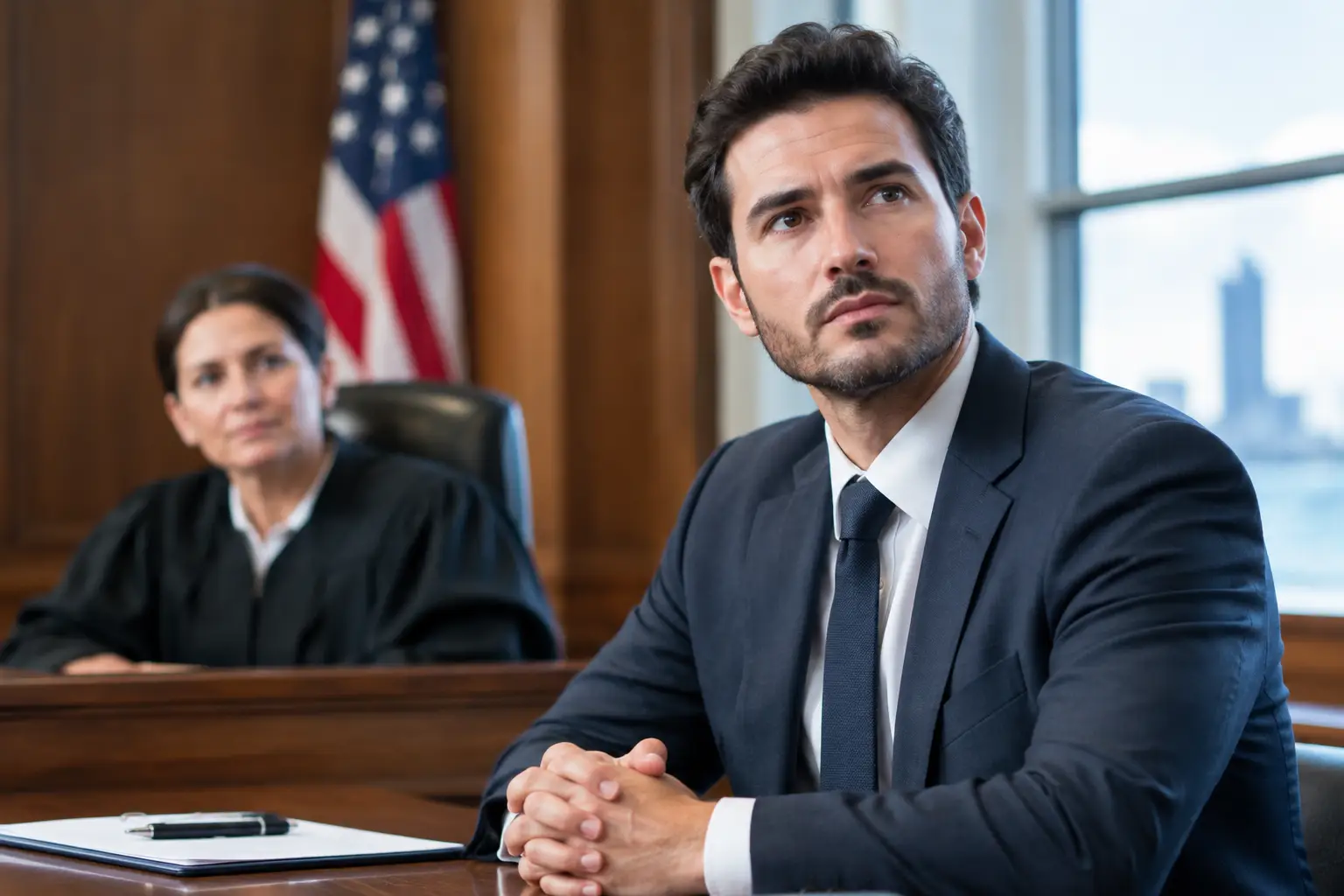
A DUI arrest can make it feel as if the outcome has already been decided. It has not. A DUI jury acquittal is possible when the prosecution cannot prove every required element of the charge beyond a reasonable doubt. In Miami-Dade County, the strongest defense begins immediately – before evidence disappears, memories shift, or a critical license deadline passes.
The state may have an officer’s report, roadside test observations, a breath result, or a blood test. That does not automatically equal guilt. These cases often turn on whether the traffic stop was lawful, whether police followed required procedures, whether the testing was reliable, and whether the evidence truly proves impairment at the time of driving. Your future deserves a defense that attacks every weak point.
What a DUI Jury Acquittal Actually Means
A jury acquittal means the jurors return a not-guilty verdict after trial. The state had its opportunity to present evidence, but it failed to meet its burden of proof. You do not have to prove you were innocent. The prosecution must prove guilt beyond a reasonable doubt, and a skilled defense can expose doubt where the state tries to present certainty.
At trial, the prosecutor generally must establish that you were driving or in actual physical control of a vehicle while under the influence of alcohol or controlled substances to the extent that your normal faculties were impaired, or while having an unlawful breath or blood alcohol level. Each part of that case can be challenged.
An acquittal is not a promise any attorney can make. Every arrest has different facts, evidence, witnesses, and procedural issues. But a case that looks overwhelming on the night of an arrest can look very different after a focused investigation, motions practice, and cross-examination in front of a jury.
The state carries the burden, not you
Jurors are instructed to evaluate evidence, credibility, and reasonable doubt. An officer’s opinion is evidence, but it is not beyond challenge. A police report is not a video recording. Field sobriety exercises are not medical tests. A breath machine result is only as dependable as the device, its maintenance, the operator, and the procedures used before and during testing.
The defense does not need to show that every fact in the state’s case is false. One meaningful failure can be enough to create reasonable doubt. If the stop was unconstitutional, key evidence may be excluded. If an officer’s testimony conflicts with body-camera footage, credibility can become the central issue. If the breath test process was flawed, the number on the printout may carry far less weight than the prosecution wants the jury to believe.
How a DUI Jury Acquittal Is Built
A serious DUI defense is not built on a generic argument that you only had a few drinks. It is built by testing the government’s evidence from the first police encounter through the courtroom. That work must start early because surveillance footage may be overwritten, witnesses can become difficult to locate, and the administrative driver’s license process has deadlines separate from the criminal case.
Challenge the reason for the stop
Police cannot stop a vehicle based on a hunch. They need a lawful basis, such as a traffic violation, a legitimate equipment issue, or objectively reasonable suspicion of criminal activity. We examine the alleged reason closely. Was the vehicle actually weaving? Did the officer mistake normal driving for impairment? Did dash-camera footage support the report, or contradict it?
Even when an officer had a valid reason to initiate contact, the scope and duration of the stop matter. Unjustified delays, unlawful searches, and improper detention can create issues that affect whether evidence is admissible at trial.
Put roadside exercises in their proper context
Field sobriety exercises are designed to provide officers with clues of impairment, but real people do not perform under laboratory conditions on the shoulder of a Miami roadway. Heat, rain, uneven pavement, traffic noise, poor lighting, medical conditions, injuries, footwear, anxiety, age, and language barriers can affect performance.
The officer must also administer and score these exercises correctly. Small deviations can matter. A defense investigation looks at the instructions given, the surface used, the conditions at the scene, and whether video footage supports the officer’s claims. A person who appears nervous or unsteady after a traffic stop may be frightened, exhausted, injured, or dealing with a physical limitation. That is not the same as proof of DUI.
Scrutinize breath and blood evidence
A breath result can be powerful evidence, but it is not immune from challenge. The machine must be properly maintained and inspected. The test must be administered according to required procedures. The operator’s actions, the observation period, possible mouth alcohol, medical conditions, and the timing of the test may all require close review.
Blood testing brings its own questions. Who drew the sample? Was the chain of custody intact? Was the sample stored, handled, and analyzed properly? Was the test obtained through valid consent, a warrant, or another lawful basis? The answer can affect what the jury is permitted to hear.
A number alone does not tell the whole story. Alcohol concentration can change over time. The result from a test taken later at a police station may not precisely establish what was happening at the time the person was driving. Depending on the facts, that gap can be critical.
Expose gaps in the officer’s story
DUI prosecutions frequently depend on an officer’s observations. Cross-examination is where assumptions get tested. Was the officer positioned to see what the report claims? Did the officer document details accurately? Did body-camera footage capture facts the report left out? Were innocent explanations ignored?
A strong trial defense does not attack an officer merely to be confrontational. It uses records, video, training standards, timelines, and objective evidence to show a jury where the state’s version is incomplete or unreliable. Precision matters. So does preparation.
Your License Case and Criminal Case Are Different Battles
A not-guilty verdict in criminal court does not automatically resolve every driver’s license issue. In Florida, the administrative license suspension process is separate from the criminal DUI case, and the window to challenge a suspension can be extremely short. Missing that deadline can limit your options, even if the criminal case is later reduced or resolved favorably.
That is why waiting for a court date is risky. A complete DUI defense evaluates both fronts immediately: the criminal charge threatening your record and freedom, and the administrative process threatening your ability to drive to work, school, medical appointments, and family obligations.
For professionals, parents, commercial drivers, and anyone whose livelihood depends on mobility, the license consequences can be as urgent as the criminal charge. The right strategy depends on your prior record, the alleged test result, whether you refused testing, and the circumstances of the stop.
What to Do After a Miami DUI Arrest
Do not try to explain the case away through texts, social media posts, or conversations with people who were not there. Do not assume a breath result means you should plead guilty. Preserve every document you received, write down what happened while the details are fresh, and identify possible witnesses or nearby businesses that may have video.
Then act quickly. An experienced Miami DUI defense lawyer can review the arrest paperwork, examine the license deadline, seek available footage, assess testing records, and identify issues before the prosecution builds momentum. The earlier that review begins, the more opportunities there may be to challenge the case on facts rather than fear.
A DUI charge can threaten your license, your career, your reputation, and your freedom. Do not let the arrest report write the final chapter. Put the evidence under pressure, force the state to meet its burden, and take control of the defense while there is still time to protect your future.