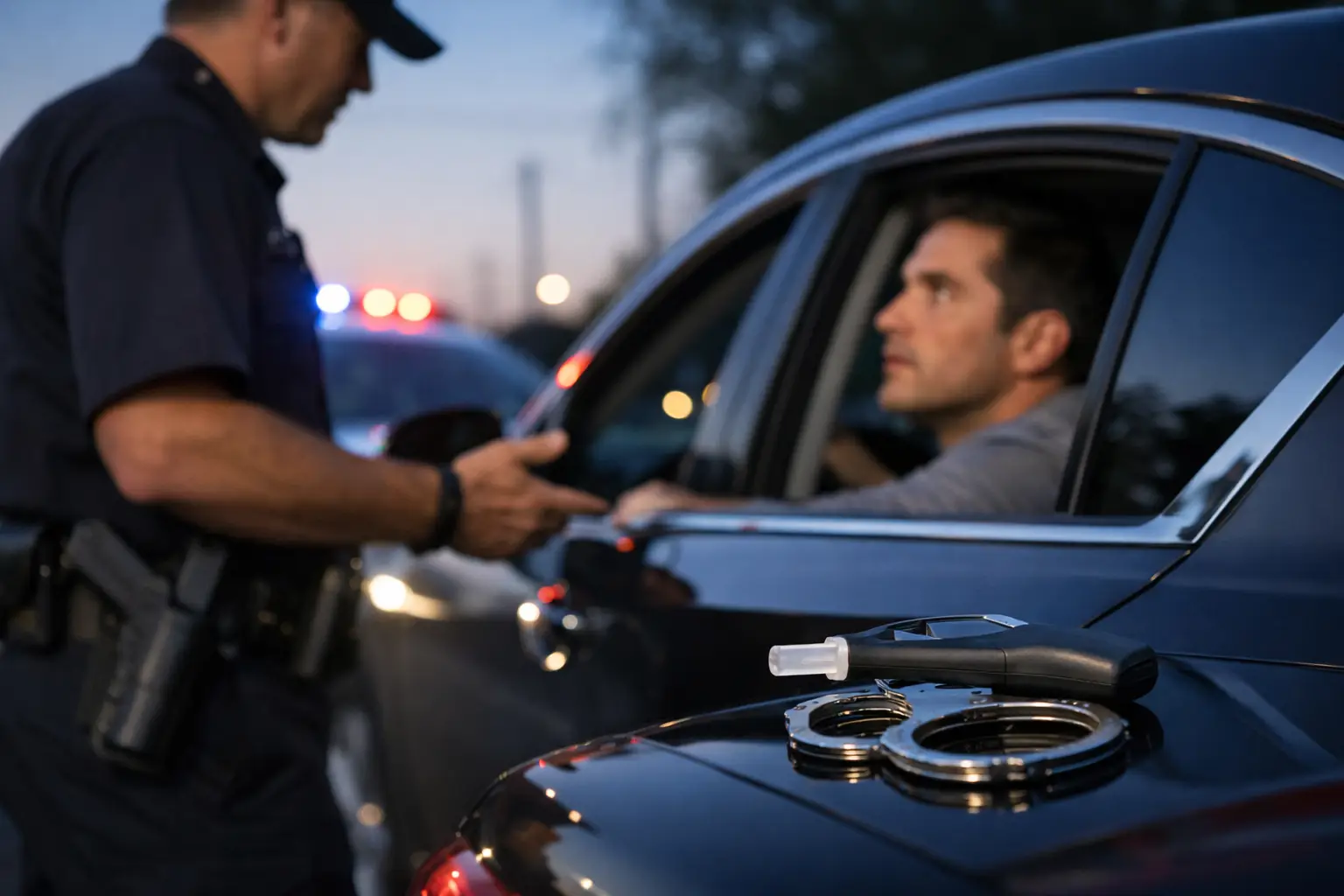
A blue light in your mirror can set off panic fast. But in many DUI cases, the first question is not what happened after the stop. It is whether the officer had the legal right to stop you at all. If you are asking, can a DUI be dismissed for improper traffic stop, the short answer is yes – but only when the facts and the law line up in your favor.
That issue matters more than most drivers realize. If the traffic stop was unlawful, the prosecution may lose key evidence gathered afterward, including the officer’s observations, field sobriety exercises, statements, and sometimes even breath test results. When that happens, a DUI case can weaken quickly. In the right case, it can lead to suppression of evidence and dismissal.
Can a DUI Be Dismissed for Improper Traffic Stop in Florida?
Yes, a DUI can be dismissed if the stop violated your constitutional rights. In Florida, an officer generally needs a valid legal reason to pull you over. That reason usually falls into one of two categories: probable cause that a traffic law was violated, or reasonable suspicion that criminal activity was happening.
Those standards are not the same, and the distinction matters. If an officer claims you committed a specific traffic infraction, the court will examine whether the facts actually supported that claim. If the officer says your driving suggested impairment, the court will look at whether the observed conduct created reasonable suspicion of DUI.
A hunch is not enough. A generalized suspicion is not enough. And a stop based on a mistake that does not hold up under the law may be challengeable.
Still, not every bad stop automatically gets a case thrown out. Courts look closely at what the officer knew at the time, what appears on body cam or dash cam, what dispatch records show, and whether the state can justify the stop another way. That is why these cases turn on details, not assumptions.
What Counts as an Improper Traffic Stop?
An improper stop usually means law enforcement pulled a driver over without lawful justification. Sometimes that happens because the officer misread what they saw. Sometimes the stop is based on a vague claim like “weaving” when the video does not support it. Sometimes the officer cites a traffic violation that is not actually a violation under Florida law.
For example, drifting briefly within your lane is not always enough for a valid DUI stop. Touching a lane marker once may not be enough either. A stop based only on being in a high DUI enforcement area or leaving a bar late at night is not automatically lawful. Officers need specific, articulable facts.
There are also cases where a stop begins with one stated reason and later shifts to another. That can raise credibility problems. If the police report says one thing, the body cam shows another, and testimony changes later, the defense has room to attack the legality of the stop.
Why the Stop Matters So Much in a DUI Case
The stop is the doorway to the entire investigation. Once the officer approaches your car, they may claim they smelled alcohol, saw bloodshot eyes, heard slurred speech, or noticed fumbling. From there, they may ask you to perform roadside exercises or submit to chemical testing.
If the doorway was illegal, the defense may argue that everything that followed was tainted. That is the basis for a motion to suppress. The goal is to keep unlawfully obtained evidence out of court.
And that is where DUI cases can turn. Prosecutors often rely heavily on the officer’s observations after the stop. Remove those observations, and the case may lose its foundation. In some cases, the state cannot proceed. In others, the prosecutor may offer a reduced resolution instead of risking a weak trial.
How a Defense Lawyer Challenges the Stop
This is not about making a technical argument for the sake of it. It is about forcing the state to prove that police followed the law before putting your license, record, job, and freedom at risk.
A strong DUI defense starts by investigating the stop from every angle. That includes reviewing the arrest report, body cam footage, dash cam footage, dispatch logs, 911 calls, breath test records, and any available witness statements. Timing matters too. A few seconds of video can expose whether the officer really saw a violation before activating lights.
Then the legal challenge begins. Your attorney may file a motion to suppress and argue that the stop lacked reasonable suspicion or probable cause. At the hearing, the officer can be cross-examined under oath. That matters. Claims that sound clean in a report do not always hold up in court.
A good cross-examination can expose exaggeration, poor memory, contradictions, or reliance on conduct that was perfectly lawful. If the judge finds the stop invalid, the evidence obtained after the stop may be excluded.
Common DUI Stop Problems That Can Help the Defense
Some stop challenges appear more often than others. One is the alleged lane violation that does not show up clearly on video. Another is the broad claim of erratic driving without specific examples. A third is stopping a driver based on a tag, registration, or vehicle description issue that turns out to be mistaken.
There are also checkpoint cases. DUI checkpoints can be lawful, but only if police follow strict procedures. If the checkpoint operation was not conducted properly, the stop may be vulnerable to challenge.
Anonymous tips can create issues too. If an officer stops a car based only on an unverified tip, the defense may argue there was not enough reliable information to justify the stop. The state has to show more than rumor.
None of this guarantees dismissal. But each weakness creates leverage. In a serious DUI case, leverage matters.
Can a DUI Be Dismissed for Improper Traffic Stop if You Failed a Breath Test?
Sometimes, yes. Drivers often assume a breath result ends the case. It does not. A breath test may look damaging, but if the initial stop was unlawful, the defense can still attack whether the state should be allowed to use the evidence at all.
That said, the exact result depends on how the evidence was obtained and what other facts exist. If the prosecution has independent evidence unrelated to the stop, they may try to keep the case alive. If all major evidence flowed from the unlawful stop, the damage to the state’s case can be severe.
This is why quick legal action matters. Waiting too long can make it harder to preserve footage, identify inconsistencies, and build a suppression argument with the precision it requires.
Florida DUI Cases Are Fact-Specific
There is no one-size-fits-all answer here. Two drivers can be charged with DUI under very similar circumstances and end up with very different outcomes based on a few details. What lane movement was observed? How long did it last? Was there a real traffic infraction? What does the video show? What did the officer say first, and did that story change?
Judges do not dismiss DUI cases just because a driver feels the stop was unfair. The challenge must be legally grounded and supported by evidence. That is why fast, strategic review is critical after an arrest.
For drivers in Miami-Dade County, local practice matters too. Courts, prosecutors, and police agencies all have patterns. Knowing how stop issues are litigated in local DUI courts can make a real difference in how a defense is built and presented.
What You Should Do After a DUI Arrest
If you believe the officer had no valid reason to stop you, do not sit back and hope the problem fixes itself. Act immediately. Preserve paperwork. Write down everything you remember, including where you were, what the officer said, when the lights came on, and whether you believe you committed any traffic violation. Small facts can become major defense points later.
Do not assume the police report tells the whole story. It rarely does. Video and cross-examination can reveal a very different picture.
Most important, get your case reviewed by a defense lawyer who knows how to attack the stop, not just negotiate the charge. At George Law, that means moving fast, examining the evidence aggressively, and looking for the procedural mistakes that can change the entire direction of a DUI case.
A DUI arrest feels like the state already has all the power. That is not always true. When the stop itself was unlawful, the case may be weaker than it looks – and the right defense can expose it before the consequences harden into your future.