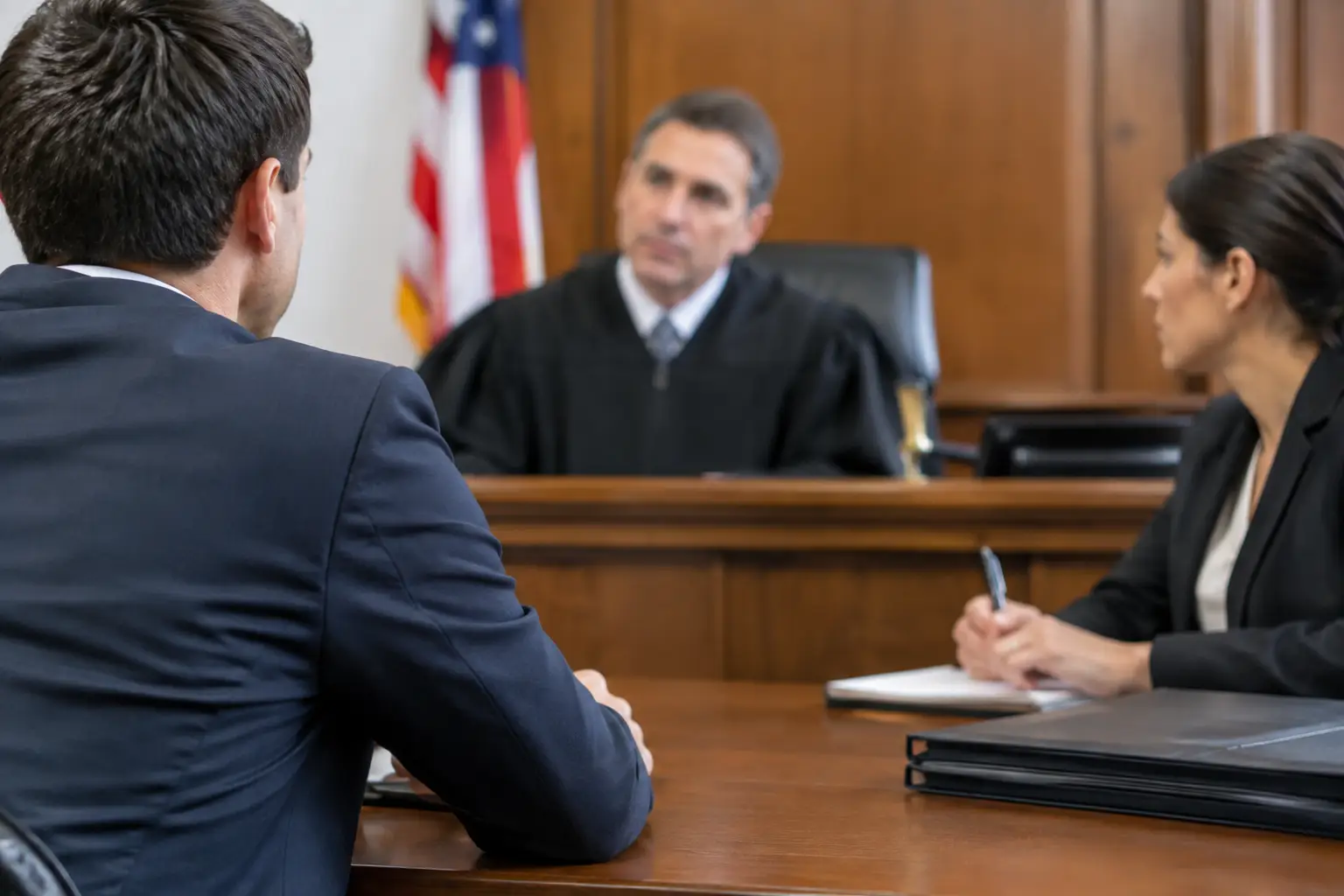
The first court appearance after a Miami DUI arrest can feel like the moment your entire future is decided. It is not. A DUI bond hearing is an urgent, high-stakes hearing, but it is not your trial and it is not a finding of guilt. It is where a judge decides whether you can be released from custody and under what conditions. What happens in those minutes can affect where you live, whether you can drive, your ability to work, and your freedom while the case moves forward.
If your family is trying to get you out of jail, or you have just been released and received bond paperwork, do not treat those conditions as routine. One violation can put you back in custody. The right legal response starts immediately.
What a DUI Bond Hearing Is Designed to Decide
In Miami-Dade County, a person arrested for DUI is generally brought before a judge for first appearance within 24 hours of arrest. The court reviews whether there is probable cause for the arrest, addresses release, and sets or confirms bond and release conditions.
The judge is not deciding whether the DUI charge can be proven beyond a reasonable doubt. That fight comes later. At this stage, the court is focused on public safety, the allegations in the arrest report, your criminal history, your ties to the community, and whether the court believes you will follow its orders.
For a straightforward first-offense DUI with no crash or injury, release may occur under a preset bond schedule or with relatively standard conditions. But the situation changes quickly when the allegations involve a high breath or blood alcohol result, a crash, property damage, a minor in the vehicle, prior DUI convictions, driving on a suspended license, refusal allegations, or injury.
A judge may raise the bond amount, impose stricter conditions, or hold a defendant without bond in limited circumstances. That is why the details presented at first appearance matter.
Common DUI Bond Conditions in Miami
Bond is more than a payment. It is a court order. In many DUI cases, the judge may require you to avoid alcohol and illegal drugs, submit to testing, not drive without a valid license, surrender your driver license, avoid contact with an alleged victim, comply with a curfew, or refrain from leaving a designated area without permission.
The court may also order a no-driving condition. This can be devastating for a working parent, health care professional, contractor, rideshare driver, or anyone who depends on a vehicle to earn a living. Do not assume you can drive because you need to get to work. If the bond order says no driving, driving anyway can trigger a bond violation.
In more serious cases, a judge may require a breath-monitoring device, an ignition interlock device if driving is permitted, GPS monitoring, or other supervision. Conditions must be tailored to the case, but judges often impose broad restrictions early because they have limited information and want to manage perceived risk.
Read every page of your release paperwork. If a condition is unclear, get a clear answer before acting. Confusion is not a reliable defense to a bond violation.
Bond Conditions Can Be Changed
A bond condition is not always permanent. If a no-driving order prevents you from keeping your job, or a condition is unnecessarily restrictive, a defense lawyer can request a modification. The outcome depends on the facts, the judge, your record, and the strength of the proposed safeguards.
For example, a person with no prior record may have a stronger argument for limited driving tied to work, school, medical care, or treatment than a repeat DUI defendant accused of driving after a prior suspension. A request must be handled strategically. The goal is not simply to ask for relief. It is to give the court a credible reason to trust you with it.
What Can Raise the Stakes at a DUI Bond Hearing?
Not every DUI arrest receives the same treatment. A prosecutor or judge may focus closely on facts that suggest greater danger or a higher risk of reoffending. Prior DUI convictions are a major concern, particularly if they are recent. A crash involving injuries, a child passenger, an extremely high alleged alcohol level, or accusations of reckless driving can also lead to more demanding conditions.
The arrest report may tell only one side of the story. Officers write reports quickly, often based on observations that are open to challenge. A claim that a driver appeared impaired does not explain whether fatigue, anxiety, a medical condition, uneven ground, poor lighting, or other factors affected field sobriety exercises. A reported refusal may not reveal whether the officer properly explained the consequences or whether equipment and procedure were handled correctly.
Those issues may not be fully litigated at first appearance, but they shape the defense strategy from the beginning. A lawyer who recognizes the weaknesses early can protect the record and prepare to challenge the evidence later.
Do Not Confuse Bond Release With Your License Case
One of the most dangerous mistakes after a DUI arrest is thinking that getting out of jail resolves the immediate crisis. It does not. Your criminal case and your driving privilege are separate matters.
In Florida, a DUI arrest can trigger an administrative driver license suspension. There is a short deadline – typically 10 days from the date of arrest – to request a formal review hearing or pursue another available option. Missing that window can cost you a critical opportunity to challenge the suspension and may affect your ability to obtain a temporary driving permit.
A bond order may restrict driving even if you have a valid permit or are otherwise eligible for a hardship license. At the same time, a hardship license does not override a court-ordered no-driving condition. You need a plan that addresses both systems without violating either one.
This is where fast, DUI-focused representation matters. George Law evaluates the criminal charge, bond conditions, arrest evidence, and DMV deadline together because your license, record, and freedom cannot be treated as separate problems.
What to Do Immediately After Release
Your first priority is compliance. Save every document you received at jail, including the bond order, citation, notice of suspension, and property receipt. Write down what happened during the stop and arrest while the details are fresh: why the officer stopped you, what was said, whether body camera footage may exist, the field sobriety exercises, breath testing, and anyone who saw you before driving.
Do not discuss the facts of your arrest on social media, in text messages, or with coworkers. Do not contact anyone you are ordered to avoid. Do not drink or use substances if your bond conditions prohibit it, even if you believe the underlying DUI accusation is unfair.
Then move quickly to preserve your options. Evidence can disappear. Surveillance video may be overwritten, witnesses may become harder to locate, and the administrative license deadline does not wait for you to feel ready.
How a Strong Defense Starts Before Trial
The defense begins by identifying what the State must prove and where the evidence may fail. Was the traffic stop lawful? Did the officer have reasonable suspicion to investigate DUI? Were field sobriety exercises administered fairly? Was the breath machine working properly? Were observation periods, warnings, and testing procedures followed?
A strong defense also examines the personal stakes. A nurse may need a lawful path to maintain a professional license. A parent may need transportation arrangements that comply with bond. A repeat-offense defendant may face far more severe exposure and need an immediate plan to address both custody risk and evidence preservation.
There are no automatic outcomes in a DUI case. Some defendants need bond conditions modified. Some need to fight a license suspension immediately. Some may have a viable challenge to the stop, arrest, chemical test, or the State’s ability to prove impairment. The earlier the case is evaluated, the more room there is to act with precision rather than react under pressure.
Your DUI arrest does not get the final word on your future. Follow the bond order, protect the 10-day license deadline, and get a clear defense strategy in place before temporary restrictions become lasting consequences.