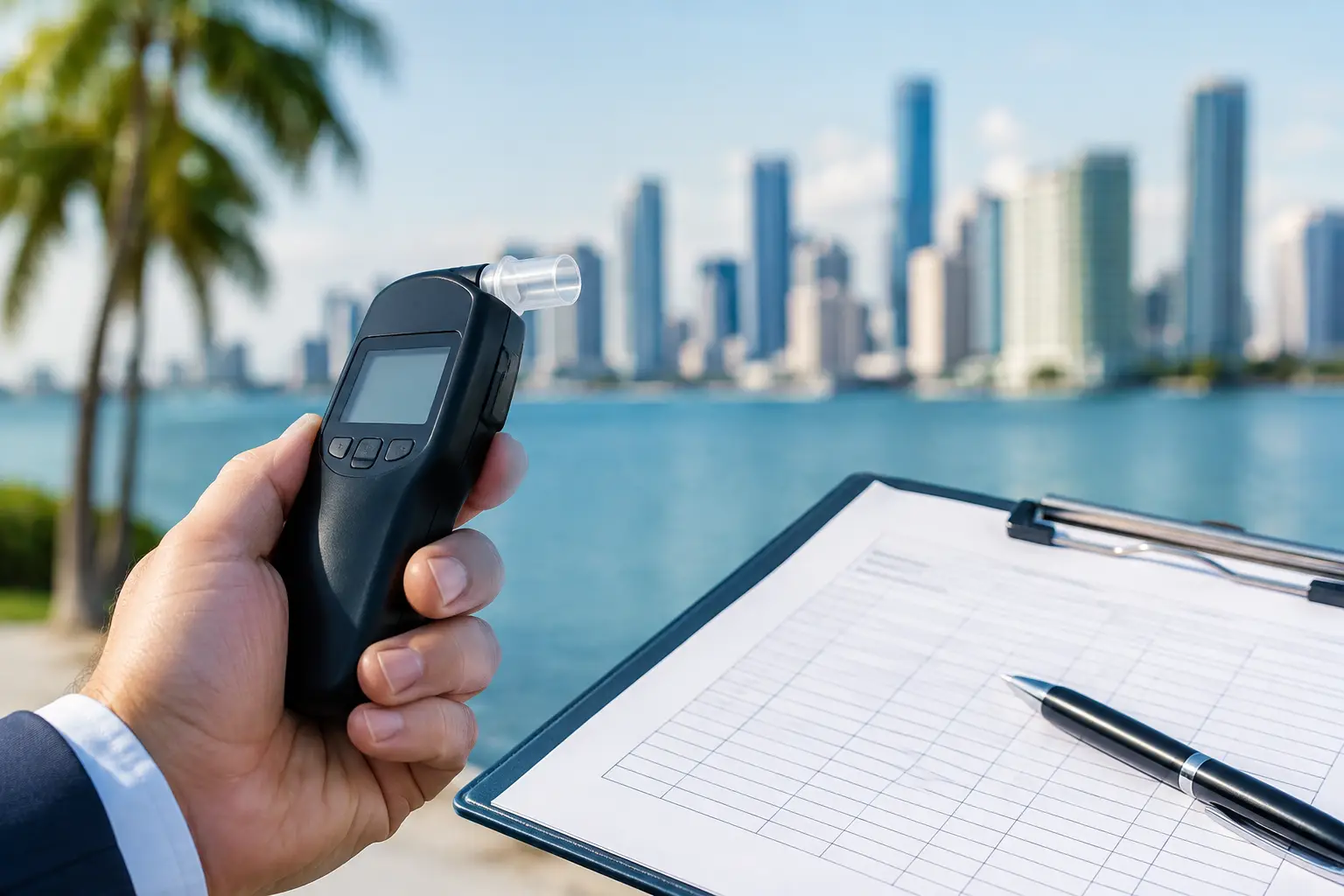
A breathalyzer calibration records request is not a technical distraction from your Miami DUI case. It can be the pressure point that exposes whether the machine, the testing process, or the State’s paperwork deserves trust. When a prosecutor relies on a breath result to portray you as impaired, the defense must demand proof that the instrument was working properly before, during, and after your test.
A number on a printout can threaten your license, job, professional reputation, and freedom. But that number did not appear by magic. It came from a regulated device operated by a person, maintained by an agency, and subject to procedures. Every one of those steps can be investigated.
What a Breathalyzer Calibration Records Request Can Reveal
Florida DUI breath testing commonly involves an Intoxilyzer instrument. The State may present the reported alcohol concentration as scientific evidence, especially when the result is at or above .08. Yet a machine result is only as dependable as the records behind it.
A breathalyzer calibration records request seeks documents showing whether the specific instrument was properly inspected, maintained, repaired, and checked under applicable rules. Depending on the case, defense counsel may also seek documents concerning the machine’s history, error messages, software or component issues, and the operator’s qualifications.
The objective is not to hunt for paperwork for its own sake. It is to determine whether the government can lay a reliable foundation for the breath result. A missed inspection, an unresolved malfunction, incomplete documentation, or a questionable test sequence may create leverage for suppressing evidence, challenging the reading at trial, or negotiating from a stronger position.
The right records can also expose a more basic problem: the prosecution may be presenting a precise number without being able to prove the system that produced it was dependable.
Which Records Matter in a Miami DUI Defense?
The useful documents depend on the arrest, the device, and the agency involved. A serious review usually looks beyond the single breath-test printout handed to the arrested driver.
Maintenance and inspection records can show whether the instrument received required accuracy checks and whether those checks were documented correctly. Repair records may reveal recurring problems, parts replacements, failed tests, or service calls close to your arrest date. Instrument logs may identify error codes, aborted tests, unusual activity, or other events that demand an explanation.
The defense may also examine records tied to the test operator. Was the officer or breath-test technician authorized and current on required procedures? Did the person follow the observation period? Were multiple samples obtained properly? Did the instrument register a mouth-alcohol warning or another issue that should have stopped or altered the testing process?
No single irregularity automatically destroys a DUI charge. That is where experience matters. A minor clerical discrepancy may carry little weight. A pattern of missing, inconsistent, or poorly explained records can be far more damaging to the State’s case.
Calibration Is Not the Same as a Clean Test
Prosecutors often treat a breath result as though it settles the case. It does not. A machine can appear to have passed a routine inspection while the individual test still raises questions.
For example, the observation period matters because residual alcohol in the mouth can distort a breath sample. Vomiting, burping, reflux, dental appliances, certain medical conditions, and contamination concerns may require close analysis. The officer’s body-camera footage, booking video, dispatch timeline, and test-room records can matter as much as the calibration paperwork.
That is why the strongest defense does not fixate on one document. It compares the records against the timeline, the video, the officer’s report, and the actual testing procedure.
How These Records Are Obtained
After a DUI arrest, it is tempting to call the police department and ask for every record yourself. That approach can create delays, produce an incomplete response, or cause you to miss the legal significance of what you receive. Some records may be available through public-records channels, while others are obtained through criminal discovery, formal notices, motions, subpoenas, or litigation requests.
The method depends on where your case stands and which entity possesses the documents. Miami-Dade law enforcement agencies, the breath-testing facility, and state authorities may each maintain different portions of the record. An experienced DUI defense lawyer identifies the proper custodian, requests the correct date range, and presses for missing material.
A focused request typically identifies the instrument by serial number or agency designation and targets records surrounding the date of the arrest. Asking only for a generic “calibration certificate” can leave critical information untouched. Asking too broadly can bury the key issue in irrelevant pages.
A lawyer should also preserve the issue early. If records later reveal a defect, the defense may need to challenge admissibility, cross-examine a State witness, seek additional discovery, or retain an expert. Those options are harder to use effectively when the case has already moved forward without investigation.
Deadlines Do Not Wait for the Records
A records request does not pause the deadlines triggered by a Florida DUI arrest. If your driver’s license was taken after an alleged breath test or refusal, you may have a limited window to request a formal review hearing and challenge the administrative suspension. In many Florida cases, that deadline is only 10 days from the date of arrest.
That hearing is separate from the criminal case, but it can be a critical early opportunity to examine the State’s evidence and protect your driving privileges. Waiting for the breathalyzer paperwork before taking action is a mistake. You must act immediately.
The criminal case has its own schedule, and evidence can become harder to locate as time passes. Video may be overwritten. Witness memories fade. Agency records may require follow-up when the initial production is incomplete. Fast action gives the defense more room to investigate instead of reacting to the prosecutor’s version of events.
When Calibration Problems Can Change the Case
A proven instrument or procedure problem can affect a case in several ways. It may support a motion to exclude the breath result. It may give the defense powerful cross-examination material. It may reduce the prosecution’s confidence in the evidence and change plea negotiations. If the breath test is weakened or excluded, the State must rely more heavily on the driving pattern, field sobriety exercises, officer observations, and other evidence that may also be challenged.
Still, clients should hear the truth: a maintenance issue does not guarantee dismissal. The State may argue that the problem was unrelated to your test, that other records establish reliability, or that it can proceed without the breath result. The defense must be ready to test those claims, not assume the case is over.
The opposite is also true. Clean-looking records do not end the inquiry. The stop itself may have lacked legal justification. The officer may have administered field sobriety exercises incorrectly. Medical conditions, fatigue, anxiety, road conditions, or language barriers may explain observations the officer calls impairment. A Miami DUI defense should examine the whole case, not surrender because a machine printed a number.
Protect Your Future Before the Evidence Hardens
If you are facing a DUI charge in Miami-Dade County, do not accept the breath result as the final word. Preserve your hearing rights, gather the arrest documents, and have the evidence reviewed while there is still time to challenge it. George Law investigates the procedures, records, and weaknesses behind the accusation so you can make decisions from a position of strength, not panic.
Your next move should be deliberate and fast: protect the deadline first, then force the State to prove that every part of its breath-test evidence deserves to be believed.