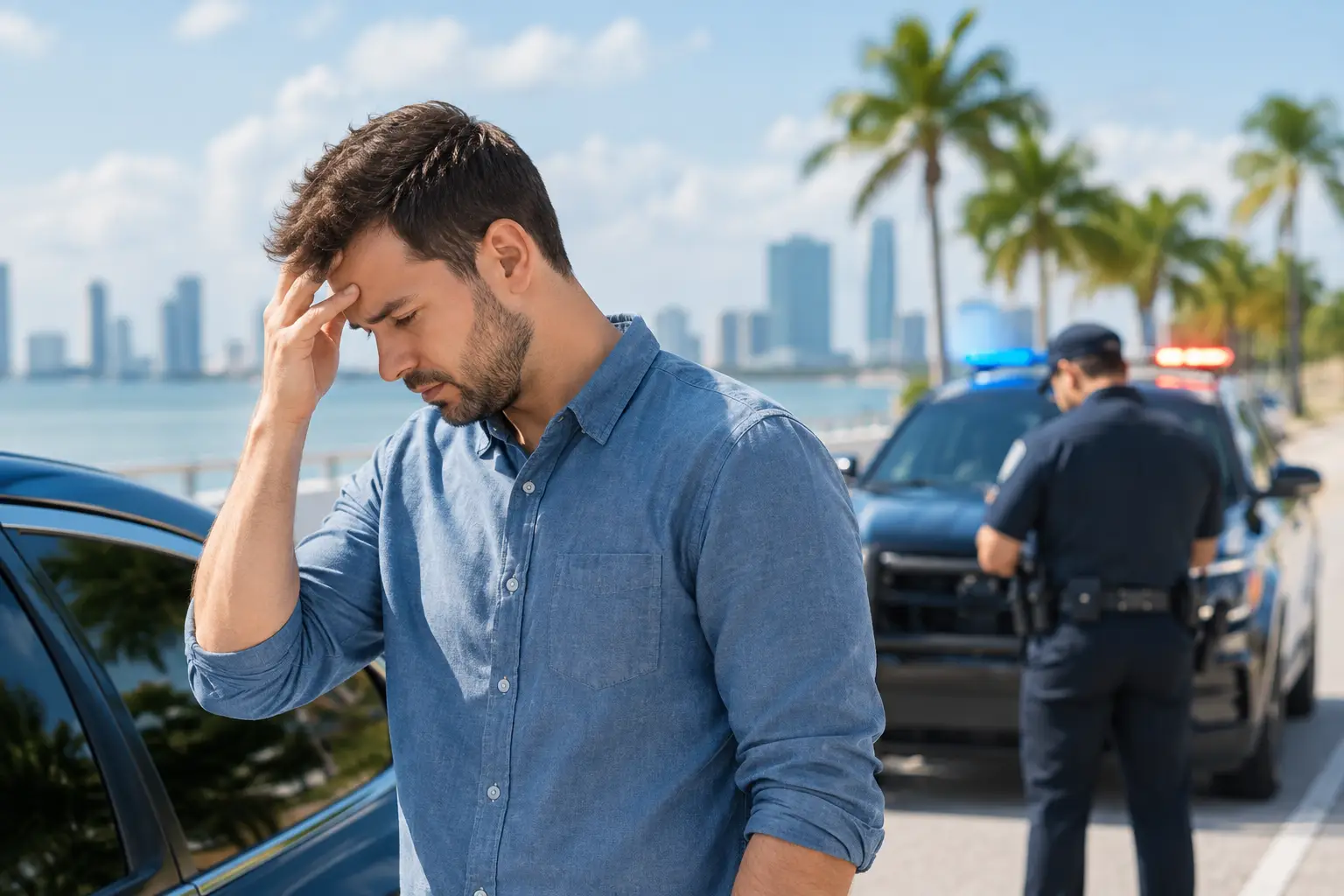
A Miami vacation, business trip, cruise departure, or weekend in South Beach can change course in a single traffic stop. If you are facing an out of state DUI, Florida does not treat the case as a minor inconvenience because you live elsewhere. You may be dealing with a criminal charge in Miami-Dade County, an immediate threat to your ability to drive in Florida, and possible consequences for your home-state license.
The good news is that being from another state does not strip you of your rights. The prosecution still must prove its case. The stop, field sobriety exercises, breath test, blood test, officer observations, and arrest procedures can all be challenged. But the clock starts immediately. Waiting until you are back home can cost you a critical chance to protect your driving privileges and build a defense.
What an Out-of-State DUI in Florida Can Affect
Florida can suspend or revoke your privilege to drive within Florida, even though your physical driver’s license was issued elsewhere. The Florida Department of Highway Safety and Motor Vehicles handles this administrative side separately from the criminal DUI case. That means a court date is not the only deadline you need to worry about.
For many DUI arrests, you have only 10 days from the date of arrest to request a review of the administrative suspension. Missing that deadline can mean losing the opportunity to challenge the suspension promptly. A temporary driving permit may be available in some situations, but eligibility depends on the facts of the arrest and your driving history. Do not assume a rental car, a flight home, or an out-of-state address makes the issue disappear.
Your home state may also learn about the Florida arrest or conviction through interstate reporting systems and state licensing agreements. What happens next depends on the laws of your home state, the final disposition of the Florida case, and your prior record. Some states may take action against your home license after receiving notice. Others may impose separate requirements before restoring driving privileges.
That is why an out-of-state case requires a coordinated strategy. You need to defend the Florida charge while understanding the risk to your driving status when you return home.
Florida DUI Penalties Do Not Change Because You Live Elsewhere
A first DUI conviction in Florida can bring fines, probation, DUI school, community service, a license revocation, vehicle impoundment, and possible jail time. The stakes increase sharply when the alleged breath or blood alcohol level is .15 or higher, when a minor was in the vehicle, when there was a crash, or when the arrest involves prior DUI convictions.
If another person was injured, the case can become far more serious. A DUI involving serious bodily injury may be charged as a felony. A fatal crash can expose a defendant to DUI manslaughter allegations, prison exposure, and consequences that follow a person long after leaving Florida.
For working professionals, the damage can extend beyond court. A DUI can jeopardize a professional license, security clearance, commercial driving work, immigration status, military career, insurance rates, and future employment opportunities. If you travel to Miami for business, a conviction can become an issue your employer, licensing board, or background-check provider eventually sees.
The 10-Day Deadline After a Florida DUI Arrest
The administrative suspension is one of the first fights after an arrest. In many cases, the officer takes the driver’s license or issues paperwork that acts as a temporary permit for a limited period. The paperwork may be confusing, especially if you are trying to arrange travel home, contact family, or deal with a rental vehicle.
Do not put it aside. The date of arrest controls the deadline, not the date you return home and not the date of your first court appearance.
A timely request for review can create an opportunity to examine the basis for the suspension. Depending on the circumstances, the issues may include whether the officer had lawful grounds for the stop, whether there was probable cause for the arrest, whether breath-testing rules were followed, or whether a refusal allegation can be supported. The administrative hearing is not a substitute for the criminal defense, but it can be a critical early stage for protecting your Florida driving privilege and gathering information.
Refusing a Breath Test Can Create Separate Problems
Florida’s implied-consent law can trigger a suspension when a driver refuses a lawful breath, blood, or urine test after arrest. A first alleged refusal can carry a longer administrative suspension than certain test-result cases. A prior refusal can raise the stakes further and may have criminal implications.
Still, an alleged refusal is not automatically beyond challenge. The exact words used, the warnings given, the timing, the officer’s conduct, and the evidence of a true refusal all matter. A rushed conclusion can turn a defensible issue into a damaging admission.
You May Not Have to Keep Flying Back for Every Hearing
One of the biggest fears in an out-of-state DUI Florida case is the travel burden. You may live in New York, Georgia, Texas, Illinois, or anywhere else, yet your criminal case is in Miami-Dade County. The practical question is simple: Do you have to appear in person every time?
It depends on the charge, the judge, the stage of the case, and what your lawyer can handle on your behalf. In many misdemeanor DUI cases, counsel may be able to appear for certain routine hearings, reducing unnecessary travel. But you should never assume you can skip a court date. Failure to appear can result in a warrant, additional expenses, and a far more difficult case.
An experienced Miami DUI defense lawyer can identify which appearances may require you personally and which can potentially be addressed through counsel. That planning matters when you are balancing work obligations, family responsibilities, and expensive last-minute travel.
A Strong Defense Starts With the Traffic Stop
Police reports often make a DUI arrest sound settled. They are not the final word. An arrest report is the officer’s version of events, and it must be tested against video, dispatch records, witness accounts, testing records, and the law.
The defense may begin with the reason for the stop. A valid traffic stop requires a lawful basis. A vague claim of weaving, an alleged lane violation, or a minor equipment issue must be examined closely. If the stop was unlawful, evidence obtained afterward may be subject to challenge.
Field sobriety exercises also deserve scrutiny. These exercises are difficult even for sober people, particularly on uneven pavement, in poor lighting, while wearing unfamiliar shoes, after a long flight, or when dealing with anxiety, fatigue, an injury, or a medical condition. Video evidence can tell a very different story from an officer’s written description.
Breath-test evidence is not untouchable either. Machine maintenance, calibration records, observation periods, operator procedures, mouth alcohol, and medical issues can all affect reliability. If blood was drawn, the collection and handling of the sample must be reviewed. The government bears the burden of proving the case, not you.
What to Do When You Return Home
Your first instinct may be to find a lawyer in your home state. That lawyer may be valuable for advising you about local licensing consequences, but a Florida DUI charge requires counsel who practices where the case is being prosecuted. Miami-Dade procedures, prosecutors, judges, local law enforcement agencies, and court practices matter.
Preserve every document from the arrest. Keep the citation, DUI affidavit, bond paperwork, breath-test receipt, impound documents, and any temporary permit. Write down what happened while details are fresh: where you were stopped, what the officer said, whether there was body-camera footage, what you ate or drank, and whether anyone witnessed the encounter.
Do not discuss the facts on social media, in texts, or casually with coworkers. Do not contact officers or witnesses to explain your side. Statements meant to help can be used against you later. Let your defense team control communications and evidence requests.
Protect Your Future Before Distance Becomes a Disadvantage
Being arrested far from home is isolating, but it is not a reason to surrender. The prosecution does not get an easier case because you live elsewhere. You need a defense built around the actual evidence, the administrative deadline, and the practical reality of managing a Miami case from another state.
George Law responds quickly because the first days after a DUI arrest can shape everything that follows. Get clear answers, protect the deadlines that protect your license, and make the state prove every part of its case. Your trip may be over, but the decisions you make now can still protect your record, your livelihood, and your freedom.