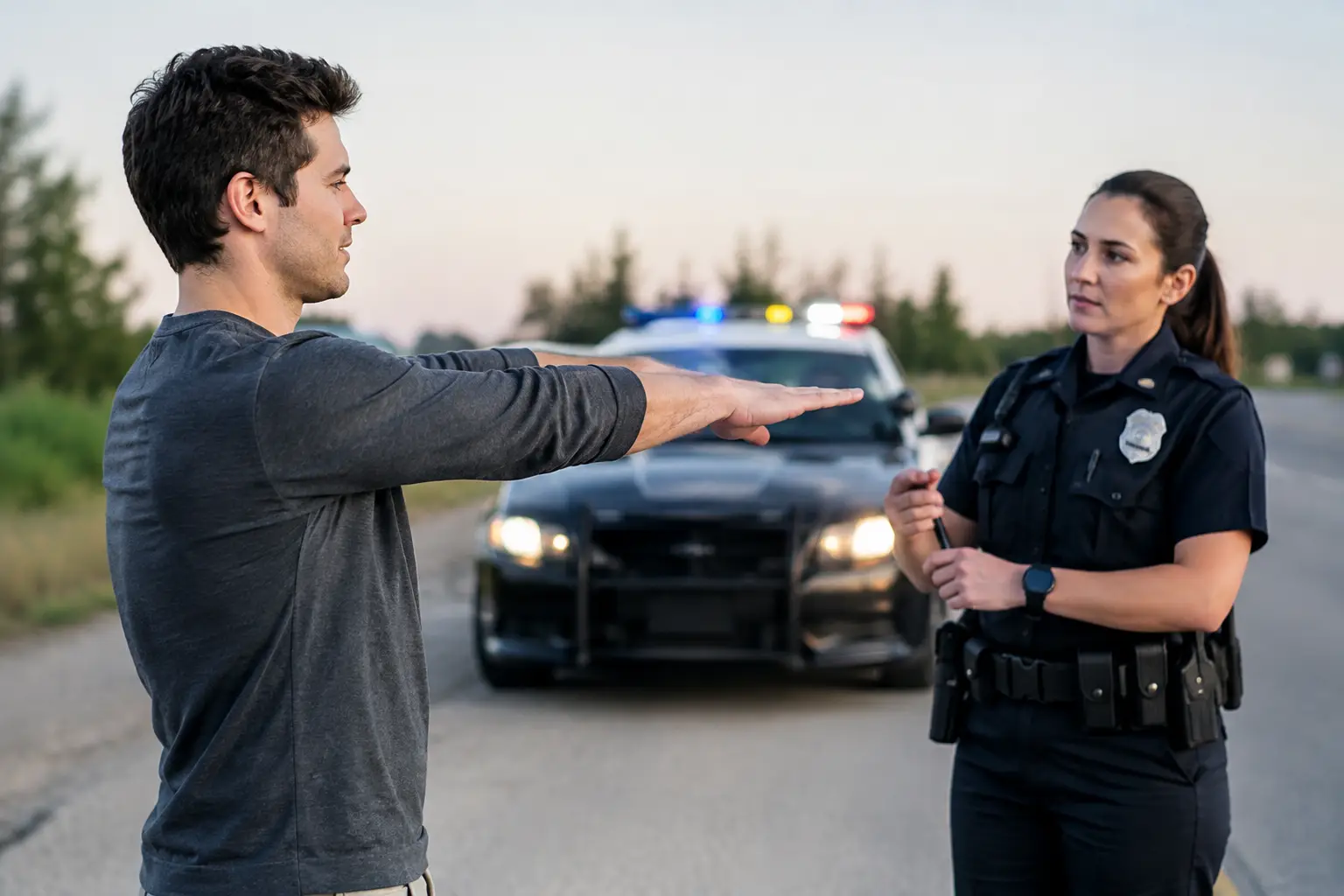
A Miami DUI arrest can begin with something that looks deceptively simple: an officer asks you to step out of the car, follow a pen with your eyes, walk a line, or stand on one foot. But how accurate are roadside sobriety tests? They can give an officer observations to report, but they are not a medical diagnosis of impairment and they are far from error-proof proof of guilt.
That distinction matters when your license, job, reputation, and freedom are on the line. A roadside test is only as reliable as the officer’s instructions, the testing conditions, your physical condition, and the way the results were interpreted. A strong DUI defense examines every one of those pressure points.
What Roadside Sobriety Tests Actually Measure
Most roadside exercises are called standardized field sobriety tests, or SFSTs. Officers are trained to use three primary exercises: the horizontal gaze nystagmus test, the walk-and-turn test, and the one-leg stand test.
In the horizontal gaze nystagmus, or HGN, test, an officer moves an object such as a pen or fingertip across your field of vision. The officer watches for involuntary eye movements that may become more pronounced with alcohol consumption. The walk-and-turn test asks you to take heel-to-toe steps on an imaginary or visible line, turn in a specific manner, and return. The one-leg stand asks you to raise one foot and balance while following instructions.
These are divided-attention exercises. The theory is that alcohol can affect the ability to process directions, balance, and perform physical tasks at the same time. But the theory does not erase the real-world variables present on the side of a Miami road at night.
A person can miss a heel-to-toe step because the pavement slopes, traffic is rushing past, flashing patrol lights are disorienting, or the officer gave rapid or unclear instructions. A person can sway because of an old knee injury, inner-ear condition, fatigue, anxiety, or unsuitable footwear. Those facts do not automatically mean the person was impaired.
How Accurate Are Roadside Sobriety Tests Under Ideal Conditions?
When officers administer the three standardized tests exactly as trained, research commonly cited in DUI enforcement suggests that the combined battery may correctly identify many drivers with blood alcohol concentrations at or above the legal limit. The HGN test is often presented as the strongest of the three, while the balance and walking tests produce lower accuracy figures when considered alone.
Those numbers require context. They are not a guarantee that a particular person was impaired, and they do not establish a blood alcohol level. Validation studies depend on controlled procedures, standardized clues, properly trained officers, and suitable testing environments. A roadside DUI stop is rarely a laboratory.
The legal question is also different from the officer’s roadside decision. An officer may use observations to support probable cause for an arrest. Prosecutors later must prove a DUI charge beyond a reasonable doubt. A field sobriety test can be part of that case, but it is not a verdict.
Why Test Results Can Be Wrong or Misleading
Field sobriety testing is vulnerable to human error before you ever take your first step. The officer must choose an appropriate location, explain and demonstrate the exercise correctly, observe the right clues, and score those clues according to training. A body camera may show that the actual stop did not match the report.
The setting can also undermine results. Miami-Dade roads are not always level, dry, quiet, or well lit. Rain-slick pavement, gravel, a narrow shoulder, highway noise, passing headlights, and the pressure of being surrounded by police can affect performance. High heels, work boots, sandals, restrictive clothing, and injuries can create the appearance of poor balance for reasons unrelated to alcohol.
Medical and personal factors matter as well. Age, weight, neurological conditions, back or leg injuries, vertigo, vision issues, and anxiety can affect walking, standing, or eye movements. Even a sober person may struggle to perform unfamiliar physical tasks while being watched, recorded, and warned that an arrest may follow.
HGN raises separate concerns. Certain medical conditions, fatigue, head injuries, medications, and improper positioning of the stimulus can affect what an officer claims to see. HGN is highly technical. If the officer lacked adequate training, moved the object too quickly, used an improper angle, or failed to account for visible medical issues, the claimed clues deserve close scrutiny.
The Officer’s Instructions Matter More Than You May Think
A field sobriety test is standardized only if the officer follows the standard. Small deviations can matter. Did the officer demonstrate the walk-and-turn? Was there a real line to follow? Were you told not to begin until instructed? Did the officer count the required time for the one-leg stand? Did the officer give you a stable, safe place to remove problematic shoes?
Video often tells a more complete story than a police report. Reports can reduce a complicated interaction to phrases such as “failed to maintain balance” or “used arms for balance.” Footage may show a driver who followed most directions, a confusing instruction sequence, or an officer interrupting the exercise.
A skilled defense attorney does not simply accept the officer’s conclusion. The investigation should compare the report, body-camera footage, dispatch records, training protocols, witness accounts, and any medical explanation that may have affected performance.
Roadside Tests Are Different From a Breath Test
Do not confuse field sobriety exercises with a post-arrest breath, urine, or blood test. In Florida, these are different forms of evidence with different legal rules. Roadside exercises generally are voluntary, while chemical-testing issues can trigger Florida implied-consent consequences after a lawful DUI arrest.
That does not mean chemical evidence is beyond challenge. Breath test machines, observation periods, maintenance records, operator procedures, mouth alcohol, medical conditions, and the timing of the test can all become critical. The point is simple: saying yes or no to roadside exercises is not the same decision as responding to a chemical-test request after arrest.
If you are stopped, remain calm. Provide required identification, avoid arguments at the roadside, and do not try to talk your way out of the situation with long explanations. What you say, how you move, and how you respond can all become part of the report.
What a DUI Defense Can Challenge
A DUI case should be investigated immediately, not treated as settled because an officer says you “failed” a test. The defense may challenge whether the initial stop was lawful, whether the officer had reasonable suspicion to extend the stop, whether field exercises were voluntary, and whether probable cause existed for arrest.
The defense can also expose flawed test administration, environmental conditions, physical limitations, unreliable observations, inaccurate report language, and conflicts between video and testimony. If a breath result exists, that evidence must be independently examined rather than assumed correct.
For Miami drivers, speed matters. Florida DUI arrests can create an urgent driver’s-license deadline, often requiring action within 10 days to protect your right to challenge the administrative suspension. Waiting can cost you options before your criminal case has even begun.
George Law investigates the evidence from every angle because a DUI arrest is not the end of the analysis. It is the moment to preserve footage, identify procedural mistakes, protect driving privileges, and build a defense before critical evidence disappears.
What To Do After a Miami DUI Arrest
Write down what happened as soon as you can do so accurately. Include the time and location of the stop, weather and road conditions, what the officer said, what exercises you performed, whether you mentioned an injury or medical condition, and whether cameras were present. Save receipts, location history, witness contact information, and any documents given to you.
Then get DUI-specific legal advice immediately. Do not assume poor performance on a roadside exercise means there is no defense. The prosecution must still prove its case, and the details that felt minor during a frightening stop may become the details that protect your future.
The hours after an arrest are stressful, but they are also strategic. Fast action can preserve your license challenge, secure evidence, and put a real defense between one roadside encounter and the consequences that could follow you for years.